Learning an instrument is one of the most rewarding things a person can do — but it takes more than showing up to lessons. The real progress happens at home, between sessions, when no one is watching. The challenge is that most students (and parents) aren't sure how to make that practice time actually count.
Feeling lost at home after a great lesson is completely normal. Without immediate feedback, it's easy to fall off track — or worse, to practise the wrong things and cement bad habits. The good news is that with a clearer approach, home practice can be just as valuable as lesson time.
It all comes down to two questions. Keep coming back to these throughout every practice session:
- Am I playing this correctly?
- How do I play this better?
If you're asking yourself these questions, you're practising with an active mind. Here are six strategies to help make that happen.
Plan your session before you sit down
Just like anything else worth doing, practice needs a plan. Walking up to the piano without one usually means running through pieces from start to finish, calling it done, and wondering why nothing is improving.
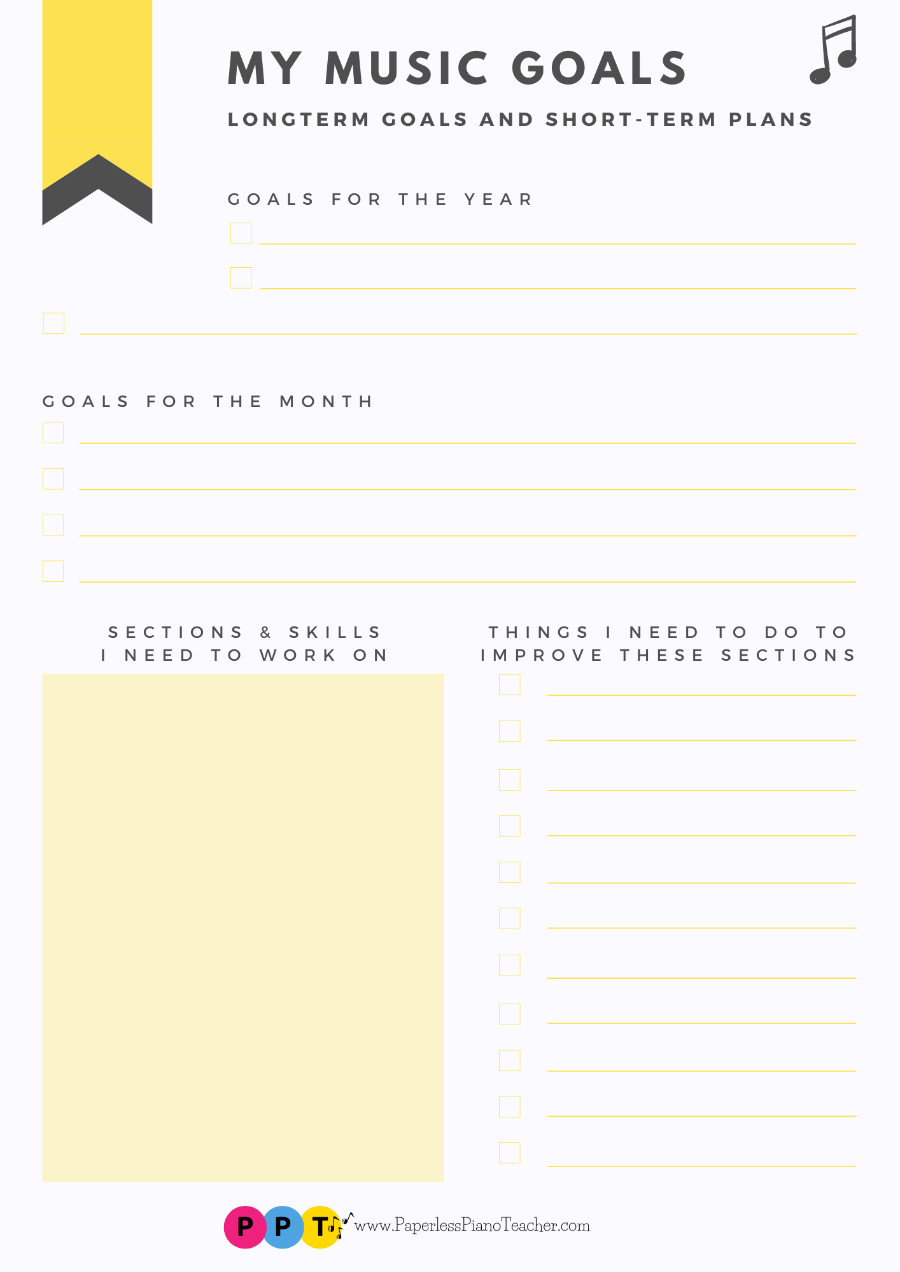
Start by setting goals at two levels:
- Long-term goals: What pieces do you want to learn? Are you working toward an RCM exam, a recital, or a specific performance? These might be monthly or yearly targets.
- Short-term goals: What do you want to accomplish today or this week? A specific section, a tricky rhythm, a cleaner transition between phrases?
Once you have a goal, design the session around it. If you want to improve expression, focus entirely on that — the notes and rhythms can take a back seat for today. If a particular bar is messy, skip everything else and drill just that section. The most important thing is to know what you're working on before you start playing.
Listen to recordings of your music
Music sticks in our brains whether we like it or not. The more you listen, the more you can put out. Listening to a good recording of the piece you're learning is a form of practice in itself — and it's one most students skip entirely.
The key is to listen actively. Focus on the quality of the sound, the phrasing, the dynamics, the tone. Ask yourself: how does the performer create that effect? Then try to imagine producing it yourself.
Take it further by reading along with the score while you listen. These days, you can often watch a performer's hands in a video, which gives you another layer of information. Use a sheet music app like ForScore or PiaScore to mark up your score as you listen — highlight dynamics, note important articulations, mark pedal points, circle anything that needs work. Writing it down is one of the best ways to move information from short-term to long-term memory.
Work in small sections, not start to finish
Running through a piece from beginning to end every practice session feels productive, but it usually isn't. You get comfortable with the parts you already know and gloss over the parts that need work — every time.
Instead, zoom in. Pick a bar or two and loop it. Work on polishing one musical phrase before moving to the next. Try one hand at a time before putting it together. Choose a distinct beginning and ending point — maybe just the A section, or up to the repeat sign — and focus there.
Focused, repetitive work on small chunks produces far quicker progress than full run-throughs. The tricky sections deserve the most attention, not the least.
Don't skip the hard parts. The instinct is to run past a messy section and keep going. Do the opposite — stop, isolate it, and repeat it until it's clean before moving on.
Practise slowly
This one is harder than it sounds. There's always a temptation to push the tempo before you're ready — it feels more satisfying, more like "real" playing. But rushing tempo before the notes are solid is one of the fastest ways to build bad habits that are difficult to undo.
Here's a useful test: if you're making more mistakes when you slow down, that's a sign you need to slow down more. If you can't play something accurately at a slow tempo, you can't truly play it at a fast one — you're just getting away with it. Master the passage slowly, and speed will come naturally over time, with the same accuracy and confidence.
Commit to your fingering
A big part of what practice is actually building is muscle memory. For that to work, you need to use the same fingers consistently every time you run through a passage. Switching finger numbers from session to session means you're never really ingraining anything — and if you build muscle memory around the wrong fingering, you may have to relearn the passage from scratch later.
Write your finger numbers directly into the score as you work through pieces. That said, stay open to adjustments — if a fingering isn't working smoothly, try a few alternatives and settle on the one that lets you move through the passage comfortably. Once you've chosen, commit to it.
Use a metronome
Rhythm is one of those things that's easy to understand in concept but surprisingly hard to execute consistently. Even if every note is correct, an unsteady rhythm will make a performance sound off. A metronome keeps you honest.
A metronome produces a steady pulse measured in beats per minute (BPM), adjustable roughly between 35 and 250 BPM depending on the model. At first it can feel restrictive, but listening closely to where your playing lands relative to the pulse quickly reveals whether you're rushing or dragging — and that awareness is the first step to fixing it.
You don't need to buy anything. Google has a free metronome built right into the search engine — just search "metronome." Most digital keyboards also have one built in. If you find a standard click hard to follow, try an app that uses a drum beat instead, like SuperMetronome.
For students who want to make rhythm practice more engaging, these apps are worth exploring:
- Set a goal before every session — practice with purpose
- Listen to recordings and mark up your score
- Work in small sections, not start to finish
- Slow down until you can play it cleanly
- Commit to consistent fingering and write it in
- Use a metronome — rhythm matters as much as notes
Ask your instructor at your next lesson if you want a practice plan tailored to what you're working on. A good teacher will already be targeting your weak spots in class — this gives you the tools to keep that work going at home.